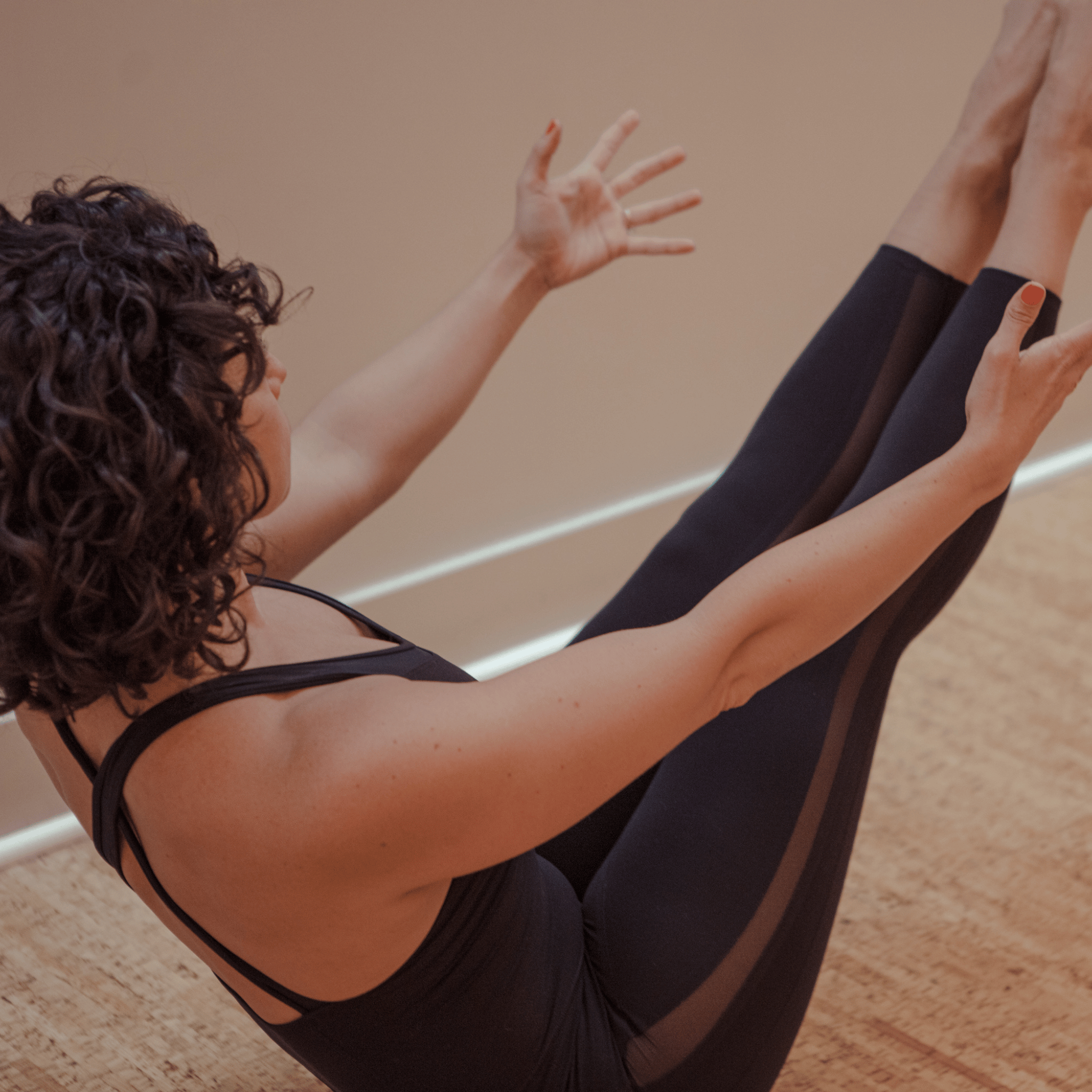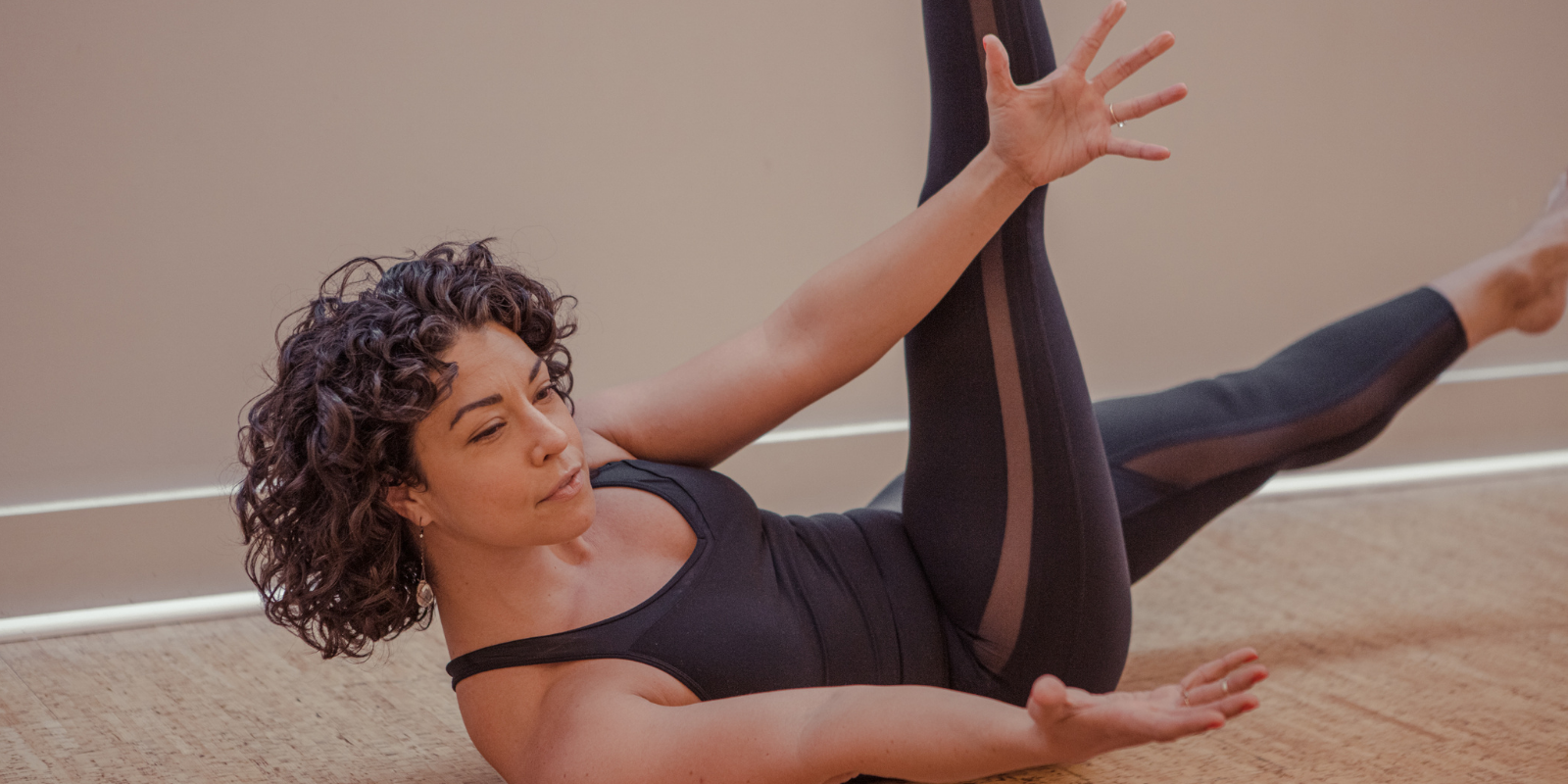
Core Activation Unlocked: The Pilates Yoga Foundation Behind Every Movement
Master core activation in mat Pilates and pilates yoga — learn the anatomy behind every cue, from TVA engagement to spinal alignment. Build strength from within.


If you've ever taken a mat Pilates class or core-based yoga session, you've probably heard the cue: "Draw your navel toward your spine." But what does that actually mean? As teachers, we often use imagery to convey how to best feel and embody a movement, yet every student's body — and interpretation — is different. So, what does this cue really ask of us, and how can we deepen our awareness of the core without getting lost in information overload?
Think of this as a deeper study of your physical practice — an exploration into the foundation that supports how you move every day.
The Core as a Multi-Layered Complex
I find the easiest way to think about the core is as a multi-layered complex that supports the entire body. Like the beams and cables on a bridge, our core connects the ribcage to the pelvis, creating stability and ease in movement. Within this system, the psoas — a deep, central muscle — is unique as the only muscle that directly connects the upper and lower body. When all parts of the core work together in harmony, they allow us to stand upright, walk with ease, and move through our pilates yoga practices with greater control. Every posture and transition benefits from stronger core awareness.
The inner unit
The inner unit stabilizes the trunk and is always "on" to help us stay upright. It includes the transverse abdominis, lumbar multifidi, pelvic floor, diaphragm, iliopsoas, and quadratus lumborum. These muscles are subtle but powerful — the body's built-in stabilizers.
The outer unit
The outer unit relates more to movement. These are your "mover" muscles: the rectus abdominis (your six-pack), obliques, and erector spinae, among others. These muscles work together to flex, extend, sidebend, and twist — not just the spine, but the entire trunk of the body, influencing how the ribs and pelvis move in coordination.
Ultimately, both units need to work together. The stabilizers set the foundation, and the movers create shape and direction.
Setting the Foundation
Let's begin with a simple breakdown of core activation as you prepare for an abdominal curl — a fundamental movement in any mat Pilates class or pilates yoga session.
First, bring awareness into the body. Building interoception — your internal sense of how your body feels and functions — is key to advancing your practice. As you lie down, notice how your body meets the mat. What feels grounded? Where does your support come from? If we don't have a stable foundation, the body has a much harder time finding control elsewhere.
Feel the back of your head on the mat, your ribcage expanding and softening as you breathe, and your feet pressing steadily into the floor. Let your sacrum — the flat bone at the base of your spine — grow a little heavier. You might try a gentle rocking of the pelvis forward and back, noticing how it can move independently of your legs and ribcage.
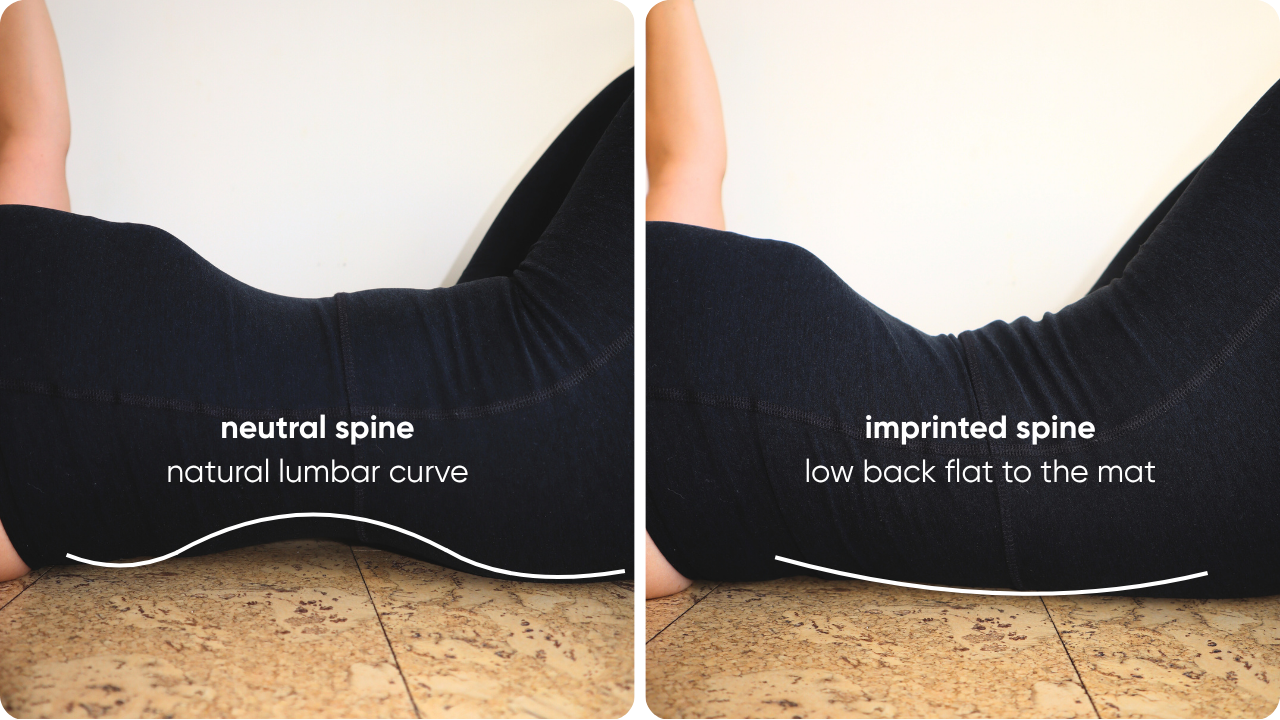
Then let your pelvis settle into neutral. This will look slightly different for everyone, but you want to sense your sacrum evenly centered on the mat. Your hands can rest on top of your pelvis, with the base of your palms at your hip bones and your fingertips toward your pubic bone. In a neutral pelvis, those three points form one level plane, and your low back maintains its natural curve just off the mat.
To move into an imprinted spine, gently fold your hip bones toward the mat, drawing the pubic bone up toward your knees. This allows the ribs and pelvis to shorten toward one another. We use this alignment when both feet leave the floor, as it creates the most stable and supported base for movement.
Finding Activation
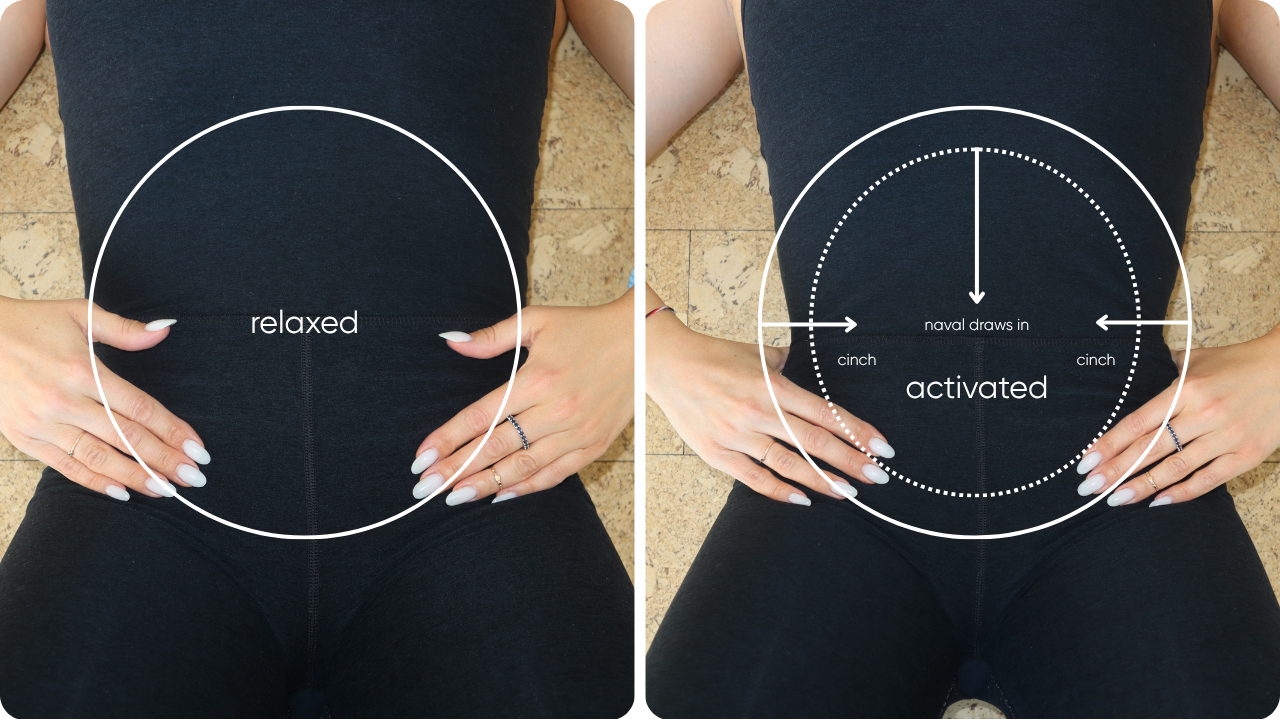
Once your foundation is set — whether in a neutral or imprinted spine — you can begin to activate. Place your hands on your hip bones, fingers just inside the bony ridges. Imagine gently drawing those hip bones closer together, as if a drawstring were cinching across the front of your pelvis. This awakens your obliques and transverse abdominis (TVA).
I like to imagine the TVA as your "abdominal airbag." When you engage it, it stabilizes and supports you from all sides. This is where the cues "cinch your side bodies" or "feel a corset around your waist" come from — it's the deepening and gentle inward activation of the TVA.
With the pelvis anchored and the side bodies lightly hugging in, we reach the familiar cue: "draw your navel toward your spine." Think of this as the continuation of that deepening — an integration of all the layers of your core drawing toward the centerline. It's not a bracing or squeezing; it's a subtle, balanced engagement that brings stability through both strength and length.
Moving with Connection
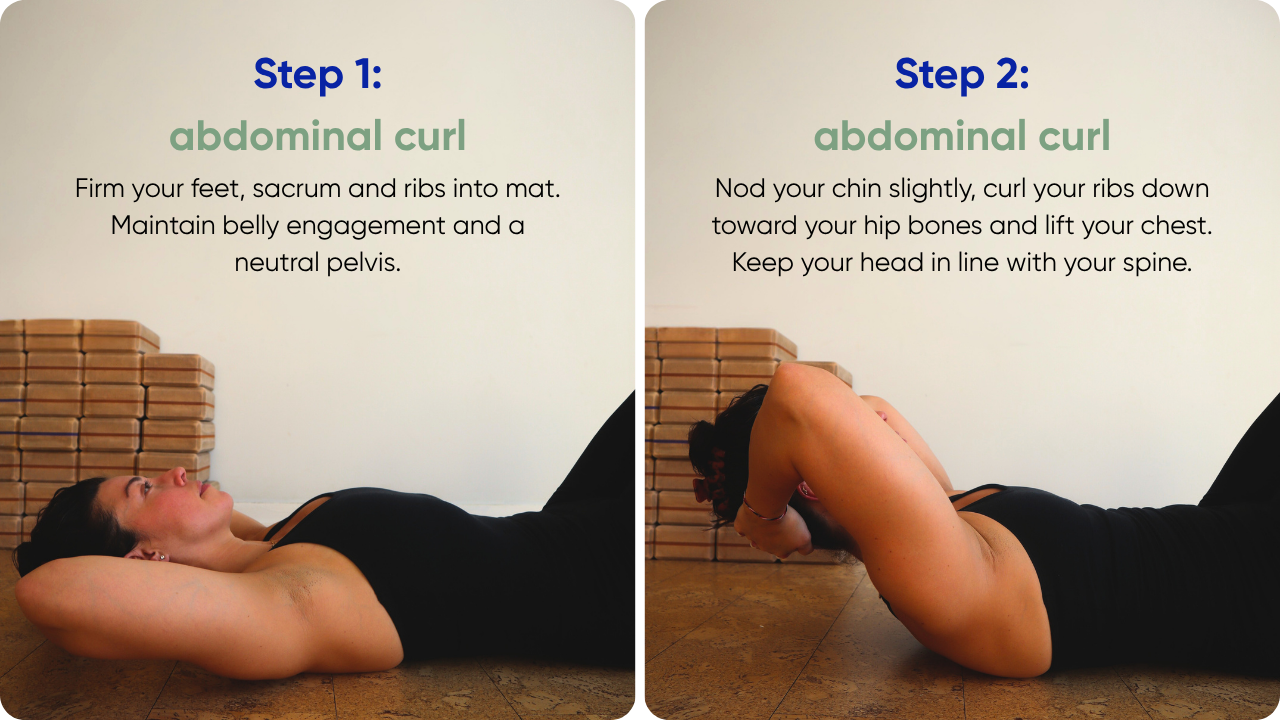
In an abdominal curl, the obliques initiate the movement by drawing the lower ribs toward the pelvis. Instead of leading with your head or shoulders, think of your ribcage as the driver, lifting everything else along for the ride. The same applies for twisting, side bending, or extending — each muscle contributes to the movement, but all rely on the core's unified support to perform effectively.
When moving beyond the abdominal curl, the same care and attention can be given to noticing how your ribcage relates to your pelvis — and how your core supports that relationship. From Downward Facing Dog to Floating Half Moon to Wheel Pose, the core continually shifts through different planes of movement, adapting to each challenge. We need the core to be both strong and supple so it can respond fluidly to all of these variations.
How to Integrate This in Your Pilates Classes
The principles above aren't just for solo study — they come alive most powerfully when practiced consistently in a structured class setting. Whether you're brand new or returning to movement, a pilates class for beginners is the ideal environment to build this foundation with guidance and feedback.
In a mat pilates class
Mat work is where core awareness begins. Without the support of equipment, your body has to do the work itself — making it the most direct way to build the TVA, oblique, and pelvic floor connection described above. In every mat pilates class at Fyra, Lindsay weaves these anatomical cues into the flow so students can feel the layers activate, not just go through the motions.
- Listen for the "drawstring" and "corset" cues — these signal TVA engagement.
- Notice when the teacher calls for a neutral vs. imprinted spine — understanding why helps you feel the difference.
- Use props like a block between the thighs to heighten inner-unit awareness.
In a pilates yoga fusion class
The pilates yoga approach at Fyra blends Pilates core principles with yoga's breath-body connection. In these classes, the same core activation applies to standing balances, inversions, and transitions that yoga sequences demand. The result is a more stable, connected practice — poses that used to feel shaky begin to find ground.
- In Warrior III or Half Moon, activate the TVA before lifting the leg — notice how balance improves.
- In Chaturanga, think "ribcage to pelvis" instead of pushing with the arms.
- In any twist, initiate from the obliques, not the shoulders.
For beginners
A pilates class for beginners moves at a pace that lets you absorb these concepts step by step. You won't be expected to master every layer on day one. Instead, each class builds on the last — gradually developing the interoception and muscle memory that make core activation feel natural, not forced.
The most important thing for beginners: come curious, not competitive. Your awareness of what's happening inside your body is the skill we're developing. Strength follows.
The Foundation Beneath Everything
The best way to develop this awareness and build a stable foundation is through your Pilates and core classes, where each exercise helps train the delicate balance between stability and adaptability.
So next time you take class, listen for these cues with a new perspective. Understanding the anatomy behind them takes time and patience, but that knowledge can unlock new freedom in how you move and feel in your body.
I'm always here for questions or deeper conversation — your growing awareness is what truly transforms your practice.
About the Author
Lindsay Janisse teaches mat Pilates classes and pilates yoga fusion at Fyra's West Village and Williamsburg studios. Her classes are designed to meet students at every level — from a first pilates class for beginners to advanced practitioners deepening their practice.
Explore Other Articles