Breathe Where You Are: Simple Pranayama for Anxiety, Sleep and Focus
Pranayama breathing techniques—from box breathing to alternate nostril—help NYC yogis manage anxiety, improve focus, and sleep better. Try them anywhere.

Why do you need yoga classes in New York? Living here, your nervous system probably works overtime. Early mornings or late nights; constant stimulation; packed schedules; minds that won't turn off even when the body is exhausted. Many people come to yoga not to master poses, but because they're anxious, burned out, unfocused, or struggling to sleep — and they want something practical that actually helps.
This is where pranayama comes in. Breathing. It's a fundamental part of the yoga practice and the yoga philosophy. No matter what's going on in the world, or even in your body, the power of our breath is always with us. And HOW we breathe can have a direct effect on our entire experience day to day.
What Is Pranayama — and Why It Matters
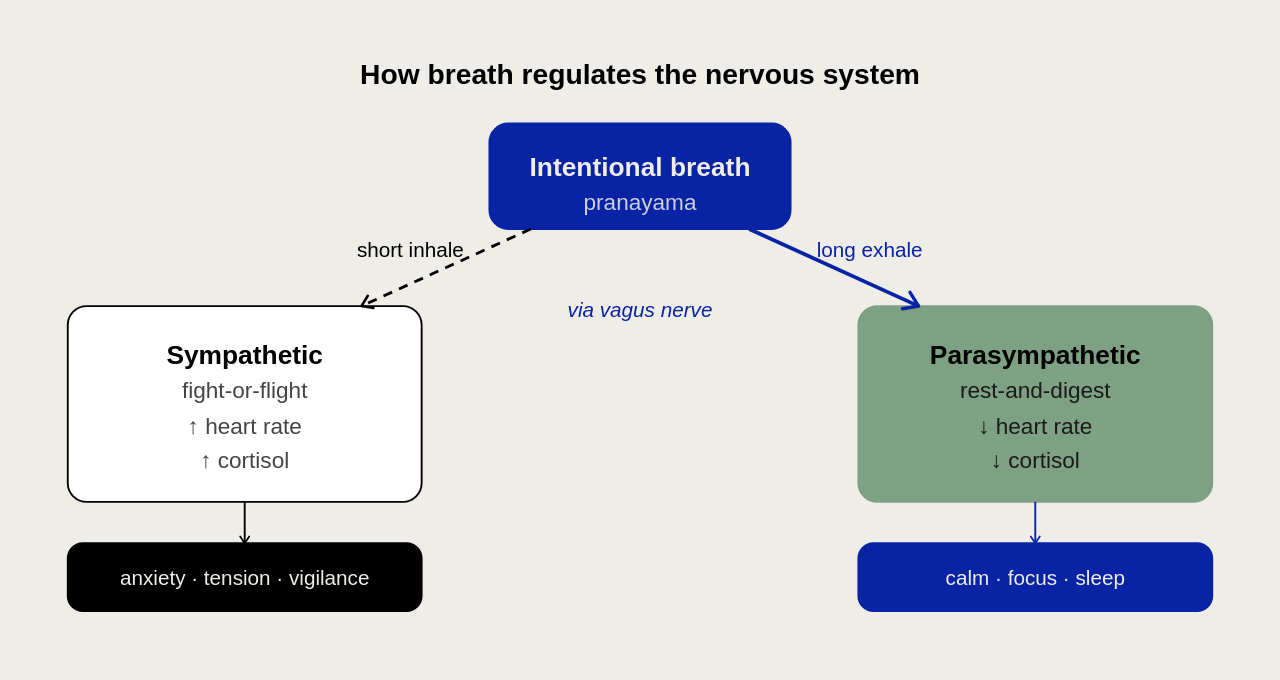
Pranayama comes from Sanskrit: prana (life force or vital energy) and ayama (regulation or expansion). Pranayama is the intentional regulation of breath to influence energy, the nervous system, and the mind.
In yoga, breath is as essential as physical postures (asana). While asana prepares the body, pranayama trains the nervous system. Modern science now confirms what yogis understood centuries ago: the breath is one of the most direct ways to regulate heart rate, stress hormones, focus, and help with sleep.
Yoga is really a breathing practice, and the breath is one of the main ways we extend our practice beyond the mat.
We teach these practices in our yoga classes in New York not only for use in class, but because they are tools accessible to you anytime: at work, at home, in line at the grocery store, in other physical disciplines.
Five Accessible Breathing Practices You Can Use Anytime
1. Extended Exhale Breathing
Best for: Anxiety, overwhelm, evening wind-down
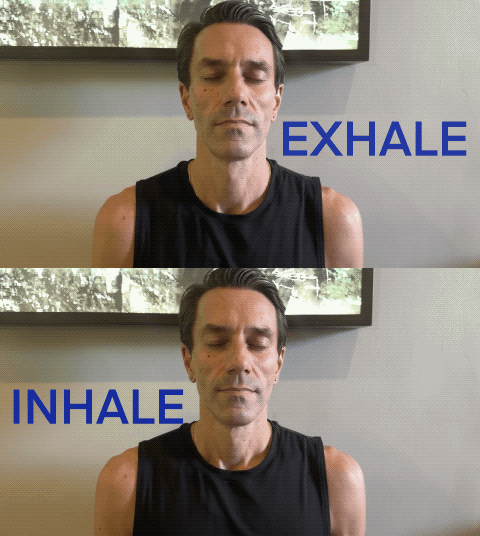
How to practice:
- Inhale through the nose for 4 counts.
- Exhale through the nose for 6–8 counts.
- Continue for 5 minutes or 8 rounds.
Why it helps: Longer exhalations stimulate the vagus nerve, activating the parasympathetic nervous system. This slows heart rate and signals safety to the brain, which is especially helpful before sleep or during gentle evening practices, or in stressful moments.
2. Box Breathing (Square Breath)
Best for: Focus, emotional regulation, workday stress
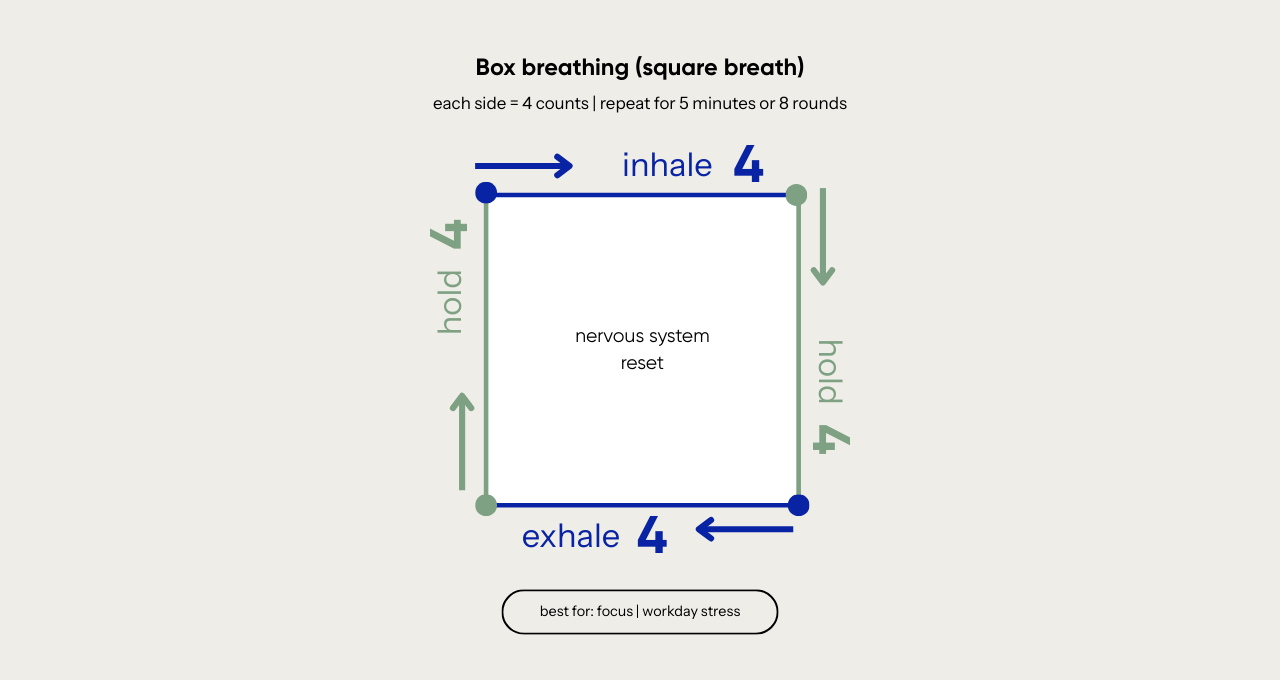
How to practice: Inhale 4 → hold 4 → exhale 4 → hold 4. Repeat for 5 minutes or 8 rounds.
Why it helps: This steady rhythm stabilizes breathing and heart rate, improving nervous system resilience and mental clarity. Useful before meetings or stressful conversations — something many students in our NYC yoga classes find immediately practical.
3. Nadi Shodhana (Alternate Nostril Breathing)
Best for: Burnout, nervous system balance, mental fatigue
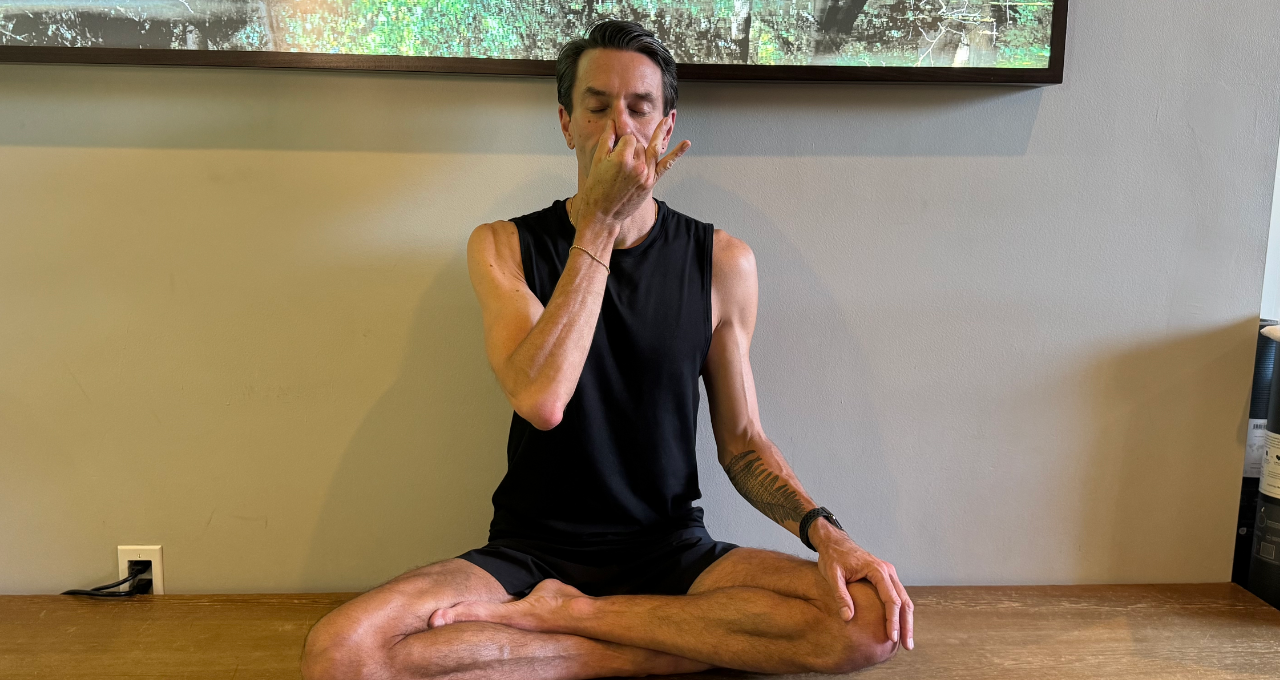
How to practice: Alternate inhaling and exhaling through each nostril for 3–7 minutes.
- With your thumb and ring finger of your right hand, palm facing your face, block the right nostril and inhale fully through the left.
- At the top of the inhale, release the thumb, block the left nostril with your ring finger, and exhale fully through the right. Pause.
- Inhale fully through the right; pause.
- Switch fingers and nostrils, exhale fully through the left. That's one full round.
- Inhale fully again through the left, pause, switch, exhale through right. Alternate for 8 full rounds.
Why it helps: This practice balances nervous system activity, reduces physiological stress, and supports calm, sustained focus. It also is said to help balance the right and left brain hemispheres, and the emotional energy channels: ida (lunar, emotional) and pingala (solar, logical).
4. 4–7–8 (Extended Exhalations) Breathing
Best for: Trouble sleeping, nighttime anxiety
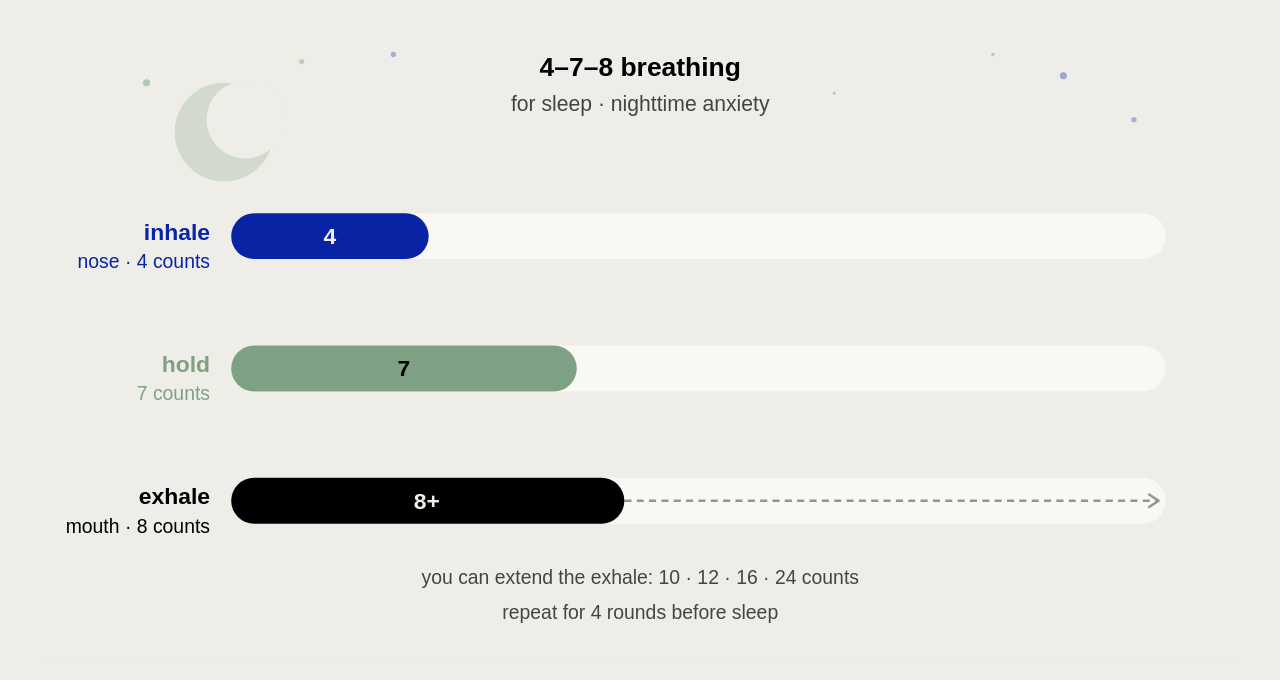
How to practice: Inhale through the nose for 4. Hold for 7. Exhale through the mouth for 8. You can increase the exhalation for as long as you can — 10, 12, 16, 24. Repeat for 4 rounds.
Why it helps: The long exhale slows the nervous system and lowers arousal, making it especially effective as a pre-sleep breathing practice.
5. Gentle (Slow) Ujjayi
Best for: Grounding, presence, stress resilience
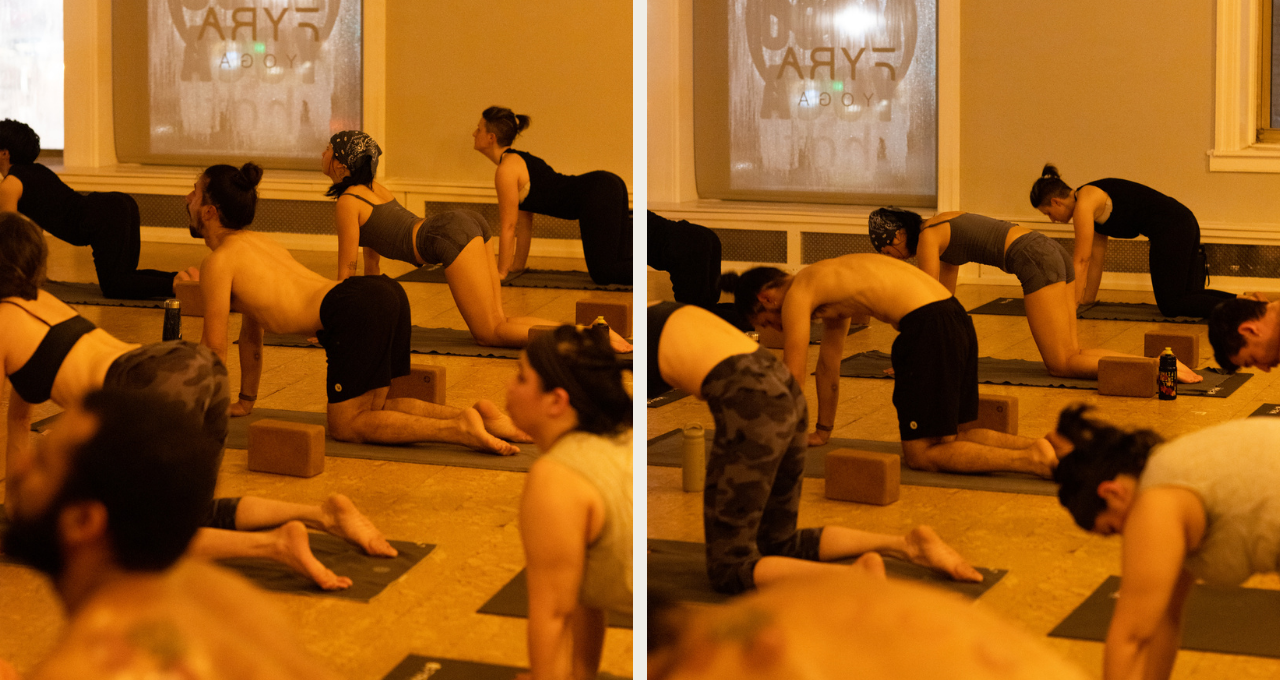
How to practice: Inhale and exhale through the nose with a soft constriction in the throat, creating a gentle ocean sound. Imagine you had a cold mirror in front of your face — try to fog it on the exhale, defog it on the inhale, but with your mouth closed. Match the length of the inhalation with the exhalation (e.g. five counts in, five counts out).
Why it helps: Ujjayi slows the breath and anchors attention in the body. The sensation, muscular engagement in the throat, and the sound reduce mental chatter and support emotional regulation.
Breathwork as a Daily Practice
You don't need long meditation sessions for breathwork to work. Even a few intentional minutes can slow the heart rate, reduce stress hormones, and help your nervous system reset. You can practice any of these tools daily, or right before a meeting, or while waiting on the subway platform.
Pranayama isn't about fixing yourself. It's about supporting a nervous system that's been doing its best in a very demanding city.
And your breath is always available.
About the Author
You can find Andrew at the Fyra West Village and Williamsburg studios, where he teaches Freestyle Flow classes. Whether you're exploring heated yoga in NYC for the first time or deepening a long-standing practice, pranayama is always a part of the yoga classes in Brooklyn and Manhattan that Andrew teaches.
Explore Other Articles