Breath, Pilates, and the Philosophy of Moving From Center
Pilates builds core strength, mobility, posture, balance & body awareness through mindful movement, breath, and control.

When people hear the word core, they often think about abs. But the deeper I teach Pilates, the more I believe the core isn’t something we train in isolation — it’s the place movement begins.
The diaphragm, pelvic floor, deep abdominals, multifidi, and the muscles that support the spine all work together to create stability, manage pressure, and organize movement. When those systems communicate well, breathing becomes easier, movement becomes more efficient, and the rest of the body doesn’t have to compensate as much.
Before Pilates is ever about aesthetics or intensity, it’s about restoring that relationship.
The breath that unlocks the diaphragm
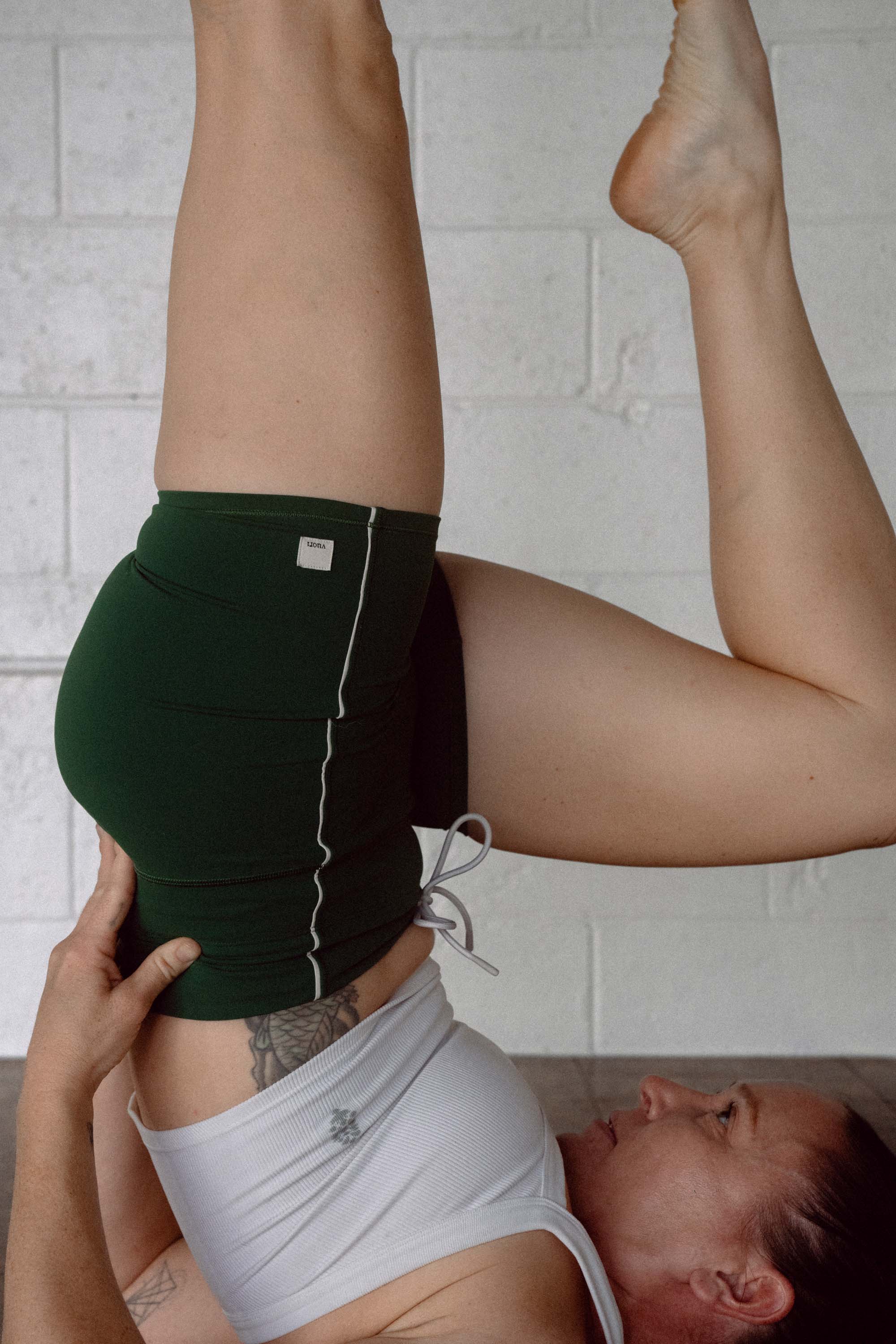
Joseph Pilates built his method around one instruction above all others: “Above all, learn how to breathe correctly.” He believed breath was the beginning and end of everything the body does — “Breathing is the first act of life, and the last.” In class, I cue that through a long “shhh” exhale: emptying the lungs fully while the ribs widen sideways instead of collapsing forward.
Like any muscle, the diaphragm benefits from moving through its full range. When we spend most of our day breathing shallowly, the neck and shoulders often start contributing more than they need to. Pilates gives us an opportunity to restore a fuller, more coordinated breathing pattern.
That breath doesn’t stop at the ribs. As you exhale and round through a C-curve — the shape you find in a Roll-Up or Spine Stretch — the pelvis tips slightly and the pelvic floor gets room to lengthen. When you return to neutral, it can lift and engage again with more coordination. I think of the breathing diaphragm and the pelvic floor — sometimes called the second diaphragm — as a pair that need to move together, not separately. That deep core is also closely tied to the vagus nerve, which is one of the reasons consistent breath work doesn’t just build strength — it helps regulate the nervous system too.
Why longevity isn’t really the goal
This is one of the reasons I’ve never believed Pilates is about memorizing exercises. It’s about understanding why we’re doing them. Joseph Pilates called the center the “powerhouse” because he believed movement should originate from a well-organized system rather than isolated effort. When we move from that place, strength becomes more useful. We rely less on compensation and more on coordination. For me, that’s what longevity really means. It’s less about moving forever and more about moving well. In my experience teaching, the students who stay with this practice for years aren’t usually the ones chasing intensity — they’re the ones who’ve learned to trust their center.
Pilates can be whatever you build it to be
One of the things I love most about teaching this method is that it refuses to sit still. Joseph Pilates developed Contrology out of gymnastics, boxing, and — famously — springs rigged to hospital beds during his internment in World War I England, an early ancestor of the reformer. From there it’s been reshaped by dancers, rehab clinicians, and now strength science, without losing what it’s actually for.
That’s one of the reasons I love teaching teachers. Pilates has never been static. It continues to evolve because our understanding of movement continues to evolve. Mat work, apparatus work, contemporary blends with functional strength training — it’s all still Pilates, because the principles travel. Understanding that gives you permission to stop looking for the “correct” version and start building the one that actually serves the body in front of you.
The Six Principles of Contrology
Everything Joseph Pilates taught traces back to six ideas. I still come back to these with every group I train:
1. Concentration — “Concentrate on the correct movement each time you exercise, lest you do them improperly and thus lose all the vital benefits.” The mind has to lead; the body follows.
2. Control — Contrology’s namesake. “Contrology begins with mind control over muscles.” Nothing is thrown or rushed; every movement is chosen.
3. Centering — All strength radiates from the powerhouse — abdomen, low back, hips, and glutes. “A few well-designed movements, properly performed in a balanced sequence, are worth hours of doing sloppy calisthenics.”
4. Flow — Exercises link with rhythm and continuity, so the practice trains not just muscles but coordination — “suppleness, natural grace, and skill” that shows up in how you walk and work, not just how you exercise.
5. Precision — Quality over quantity, always. “Correctly executed to the point of subconscious reaction, these exercises will reflect grace and balance in your routine activities.”
6. Breathing — The foundation underneath all five of the others, and the one most people skip past on their way to the “real” exercise.
It was never meant to be one-size-fits-all
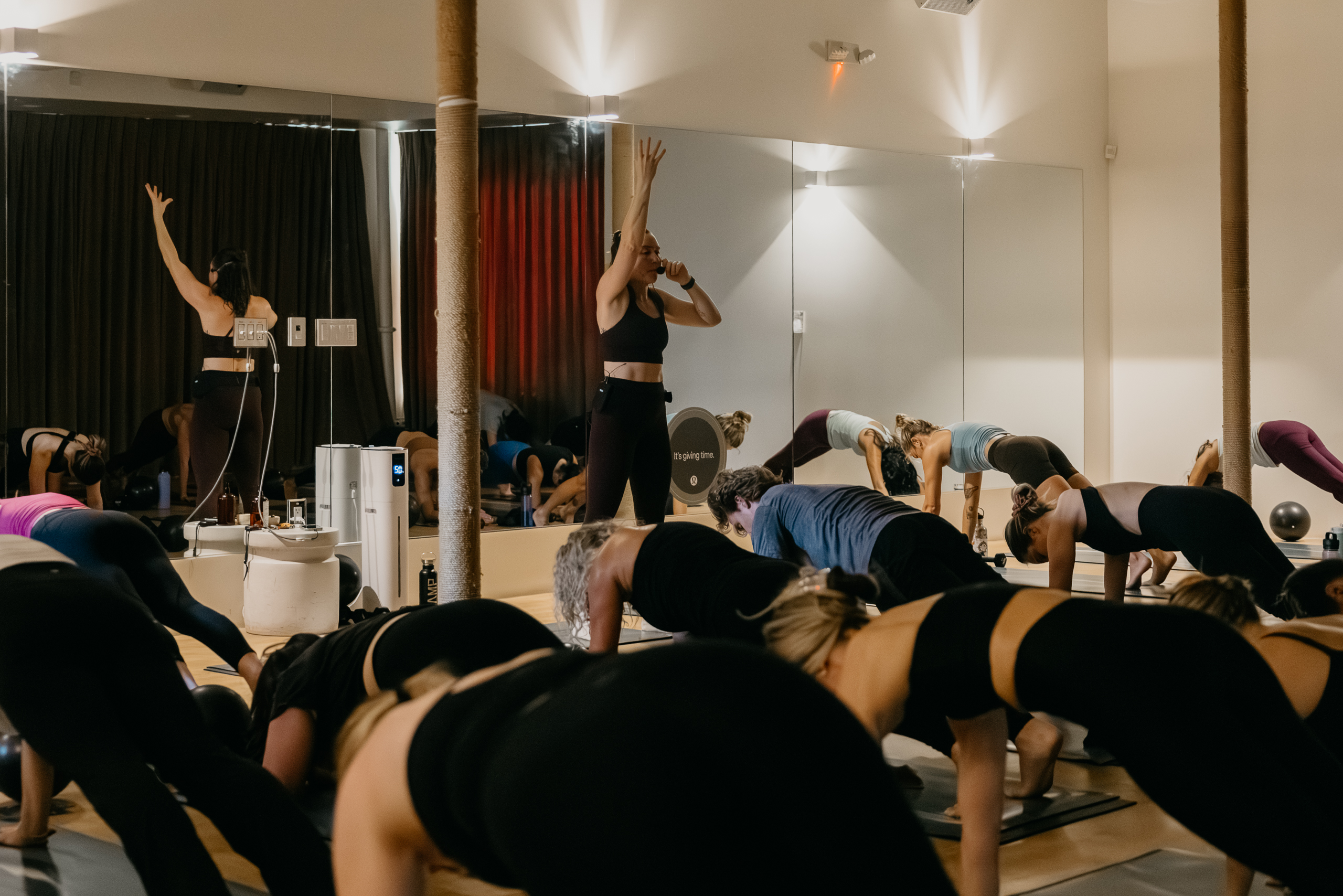
One of the biggest lessons I’ve learned through teacher training is that exercise is rarely the point.
Two people can be performing the exact same movement while working on completely different things. One might be discovering spinal articulation for the first time. Another might be learning how to manage pressure after pregnancy. Another may simply be building confidence.
Good teaching isn’t about delivering the perfect sequence. It’s about understanding the person in front of you and knowing how to adapt the principles — tempo, range, load, leverage — to meet their body.
Joseph Pilates himself was adapting constantly, right up through writing that:
“Since we live in this Modern Age, we must of necessity devote more time and more thought to the important matter of acquiring physical fitness.” — Joseph Pilates, Return to Life Through Contrology
He built a method for keeping pace with a changing world, not something meant to be preserved exactly as he left it. My hope for teachers reading this is simple: trust the principles more than the choreography. Contrology was always intended to be more than exercise. It was Joseph Pilates’ vision for helping people move through life with greater awareness, strength, and ease.
That’s ultimately what continues to draw me back to this work. Breath becomes the foundation. The core becomes a conversation rather than a muscle. Principles become more important than perfect shapes.
The exercises may change. The research will continue to evolve. But if we continue returning to the center — both literally and philosophically — the method remains remarkably timeless.
Interested in deepening your Pilates knowledge and teaching skills? Attend our Teacher Training this winter, or book a Pilates class at Fyra Yoga NYC.
Explore Other Articles